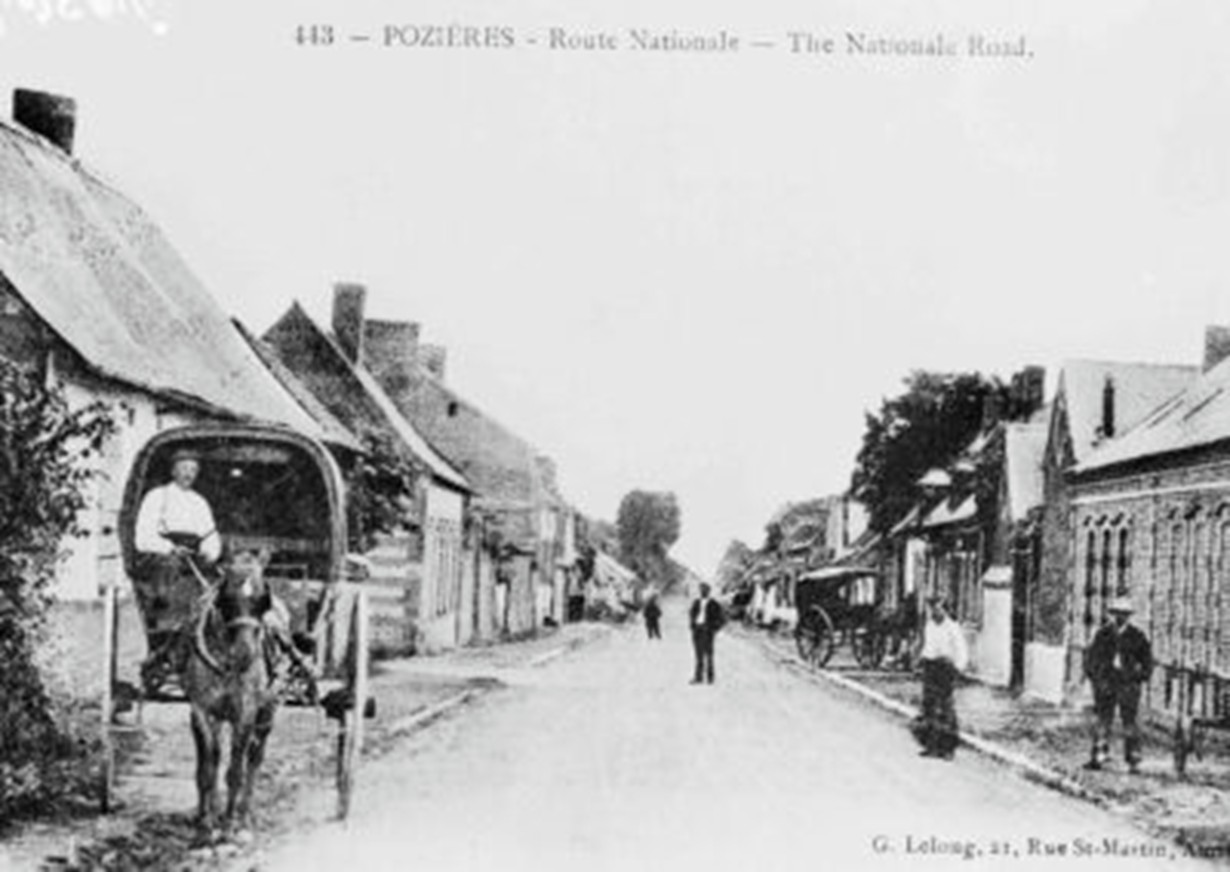
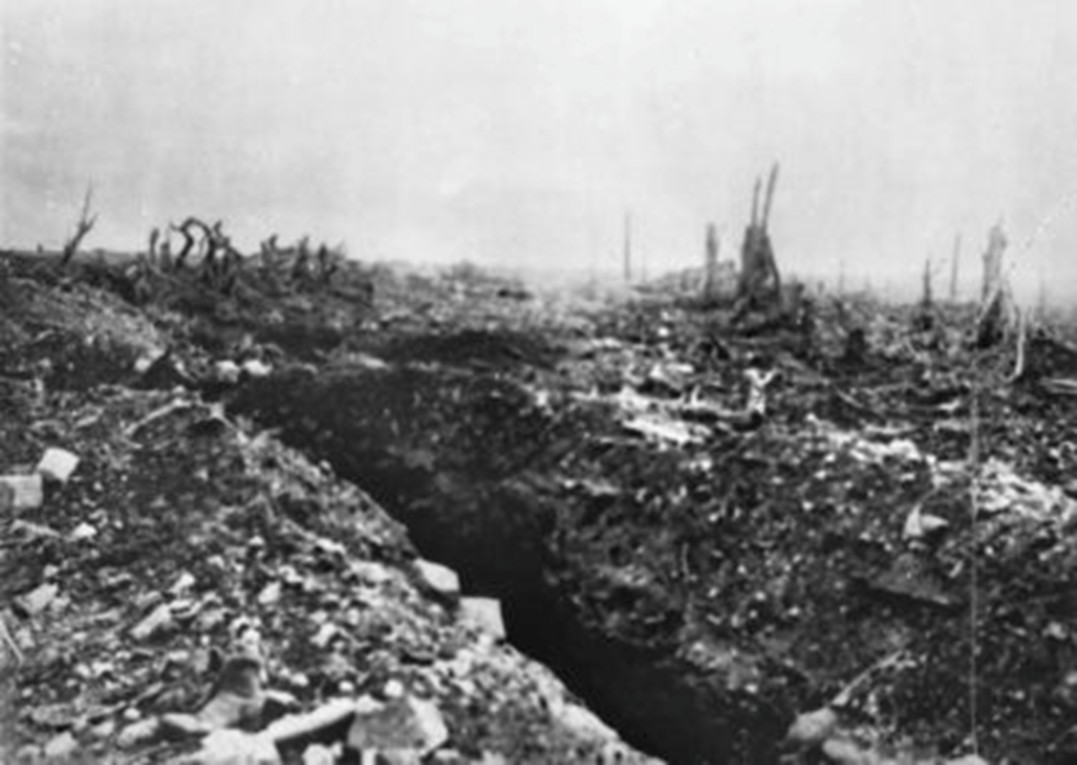
30. Pozieres & Mouquet Farm
WW1 Collie Boys at Pozieres & Mouquet Farm
Saluting their Service – Grahame Old
Introduction
It has been 110 years since the World War I battles of Fromelles and Pozieres — two of the most tragic battles in Australian military history.
The Battle of Fromelles
in July 1916, was the first major battle for the Australian Imperial Force (AIF) on the Western Front in France, it was a disastrous initiation for the 5th Australian Division. Intended as a diversionary feint to stop German reserves moving to the Somme, the attack was a total failure. Over 5,500 Australians became casualties, almost 2,000 of them were killed in action or died of wounds. Fromelles remains among the most tragic disasters in Australian military history. However a greater disaster was to follow.
The Battle of Pozieres
the bloodiest fighting of the entire WW1, took place from July through to September 1916 in northern France around the village of Pozieres, during the Battle of the Somme. Over 42 days the Australians made as many as 19 attacks against the German positions at Pozieres and Mouquet Farm. It was said that the massive German artillery barrages could be heard in England, they reduced the land to a mud pile and cut the Australians to shreds. Three Australian divisions suffered 23,000 casualties. Of these, 6,800 men were killed or died of wounds. Our nation's most famous war historian Charles Bean said the Pozieres ridge "is more densely sown with Australian sacrifice than any other place on earth".
The Battle of Pozieres and Mouquet Farm
Pozieres
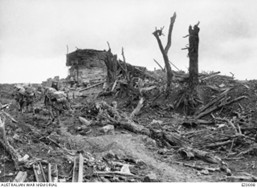
a small village in the Somme valley in France, was the scene of bitter and costly fighting for the 1st, 2nd and 4th Australian Divisions. It was said that “for several weeks Pozieres became the focus of the Somme fighting and the worst place to be on earth”. The AIF lost as many men over a few weeks as it did over 8 months on Gallipoli.
The high ground at Pozieres was an advantage, a place from which further attacks could be launched. The village was captured initially by the 1st Division on 23 July 1916. The division clung to its gains despite almost continuous artillery fire from the enemy. The Germans concentrated their bombardments on the Australians in the village and on the narrow approach roads. Despite repeated German counterattacks the 1st Div soldiers held their ground, but they suffered heavily. By the time it was relieved on 27 July it had suffered 5,285 casualties.
The 2nd Division then took over from the 1st and mounted further attacks on the well-fortified German trenches beyond the village in an attempt to gain the high ground. Despite a costly early failure, which resulted in 3500 casualties, they eventually seized further German positions. It was on this high ground that a major battle took place, the battle for the windmill. The Pozieres windmill occupied the highest point on the ridge, serving as a key German observation post and strongpoint. The Australians needed to control this high point to enable observation of the remaining German lines through to Mouquet Farm. The windmill was eventually taken after several massive attacks through heavy shell and machine gun fire. The intense, costly fighting again resulted in heavy casualties.
The Germans again responded with massive artillery bombardments on the Australian positions and again the Australians suffered heavily from the retaliatory bombardments.
The 4th Division was next into the line at Pozieres. It too endured massive artillery bombardments and German counterattacks in an attempt to retake Pozieres. The Germans failed in their attempts and the 4th Div continued movement on the high ground towards Mouquet Farm.
Mouquet Farm
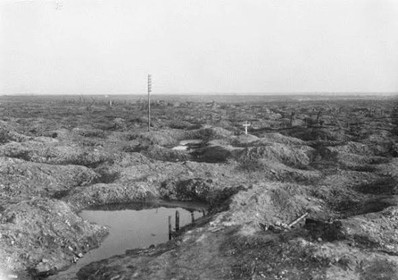
from early August through to early September, following the capture of Pozieres and the German lines at the windmill, elements of the three Australian divisions of the AIF attacked northwards along the Pozieres Heights towards the site known as Mouquet Farm, located 1.8 miles from Pozieres. The Australians launched nine separate attacks to capture the heavily fortified German position. Although the Australians managed to occupy the farm several times, they were forced back each time due to fierce German counterattacks. The site was still in enemy hands when the Australian divisions were withdrawn from the Somme to rest in early September.
While Australian troops did not fully capture and hold the farm, their persistent attacks exhausted the German defenders and helped secure the wider Allied position. The Australians suffered over 11,000 casualties in the fighting for Mouquet Farm.
The Aftermath, from Pozieres village itself, through to the windmill and north to Mouquet Farm, the countryside was battered out of existence by artillery bombardment. The unrelenting artillery fire had turned the landscape into a featureless wasteland and buried thousands of bodies into the muddied ground. Of the 6800 Australian soldiers killed around 4000 were never found and have no known grave, they are commemorated on the Australian National Memorial at Villers-Bretonneux.
Several months after the fighting at Pozieres, Charles Bean returned to the battle ground and collected the first relics for what would eventually become the Australian War Memorial and in 1932 Charles Bean persuaded the Australian War Memorial to buy the windmill ruins. It was from here that French soil was dug up to scatter on the coffin of Australia's Unknown Soldier when he was laid to rest at the Australian War Memorial in Canberra on 11 November 1993.
Collie Boys at Pozieres
18 Collie Boys were killed during the Pozieres and Mouquet Farm battles. 13 of those Collie Boys were never found, they have no known grave and are remembered on the Villers-Bretonneux Memorial.
The Collie Boys:
4037 Pte J A Briggs 3101 Pte J Devon 2143 Pte F Dudley
3106 Pte O Fisher 4272 Pte W S Fisher 4433 Pte H Gibbs
3821 Pte W F Hoinville 712 Sgt A Inglis 1592 Pte J McCullagh
613 L/Cpl F F Meacock 456 Pte J Miller 1762 Pte J D D Morrison
2833A L/Cpl F W Taylor 2936 Pte J L Thomas 2042 Pte R L White
181 Pte W Whiteaker 5215 Pte J R Williams 4254 Pte W H Wing
Source: The Australian War Memorial & The ANZAC Portal
Where Collie Boy’s Rest:
They sleep ‘neath the ridge at Pozieres,
The heroes who fell;
the guns booming faint on the ear
Is their funeral knell.
They rest ‘mid the green hills and dells,
The valleys of Somme,
And calm and majestic their sleep,
Far from kindred and Home.
(GEORGE GEDDES, Warrant Officer WW1)
Remembered Forever at The Collie-Cardiff RSL Sub Branch
‘Lest we Forget’