
13. WW2 Prisoners of War Italy
Prisoners of War in Italy-WW2
Saluting their Service - Grahame Old
Introduction
When WW2 erupted in Europe Italy was under control of the Italian fascist dictator Benito Mussolini, known as Il Duce, he formed an immediate alliance with Germany. Italian forces controlled the Middle East and were soon at war with the British Commonwealth forces, including elements of the Australian 2nd AIF Divisions. Initially the allied forces over ran the Italians taking many prisoners, some being sent to Australia for internment. Germany then rushed troops to the middle east, led by Field Marshall Erwin Rommel (the Desert Fox). Known as the Afrika Corps, Rommel’s Army quickly changed the tide of the war and numerous allied soldiers including Australians were taken prisoner. Many of the Australian POWs were interned in Italy.
Many Italians had emigrated to Australia in the 1930s to escape the fascist regime founded by Benito Mussolini, the dictator of Italy from 1922 to 1943. Hard workers they soon settled into the Australian way of life. However, Australia was now at war with Italy and Italian males were now considered as a potential threat. Internment camps were set up around Australia. In WA a camp was set up near Harvey. Over a thousand Italian males were interned without any evidence of wrong doing. The policy had a severe impact on the Australian-Italian community. In addition, Italian soldiers were arriving in Australia for internment, in WA a POW camp was built at Marrinup, not far from Harvey.
In 1943, after heavy military losses and the Allied invasion of Sicily, Benito Mussolini was deposed and went into hiding. Italy withdrew from the War and signed an armistice with the allies in September 1943. Mussolini was eventually captured and executed by Italian partisans in April 1945. In WA, the remaining Australian-Italians interned at Harvey were released (many had already been released and returned to their families). Italian POWs held at Marrinup were given the option of remaining interned or released to work on farms in WA. Many accepted the work option.
The fate of Allied POWs held in Italy was more complex, the war with Germany was still being fought, German forces were hard pressed defending the allied advance through Italy. In September 1943 when the armistice with Italy was formerly completed, the War Office in London advised that allied POWs were to remain in the camps until they could be repatriated. Some Italian Camp commanders simply let the prisoners escape into the countryside. The Germans set about securing the POW camps and rounding up escaped POWs sending them to Germany to work in factories for the German war effort. It is estimated that there were about 70,000 allied POWs in Italy and some 17,000 had simply walked out into the countryside including around 500 Australians. Many escaped to Switzerland and many joined the local Italian partisans fighting against both the Germans and the Italian Fascists. A Collie boy taken prisoner by the Germans in the first battle for El Alamein was among those allied Prisoners who joined the Italian Partisans. WX7814 Pte Daniel BLACK, 2/28th Battalion. This is his story;
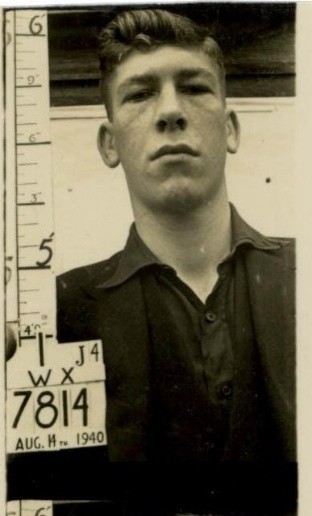
Daniel Black was born in Campbelltown, Scotland on 29 January 1920. In 1922, the family moved to WA and took up Farming in Northcliffe. When farming failed the Black family moved to Collie where Daniel and his father were employed in the mining Industry. In 1938 Daniel’s father was killed in a mining accident and Daniel became the bread winner supporting his mother and siblings. Then in 1940 when Australia joined the WAR, Daniel, enlisted. His listed Next of Kin was his mother Jean Black and place of residence 7 Steere St, Collie, WA.
Daniel underwent initial military training at Northam Army camp and in April 1941 found himself on a troopship bound for the War in the Middle East. He was taken on strength of WA’s own 2/16th Bn in June 1941. In June 1942, after further training, he was transferred to the 2/28th Infantry Battalion.
The Alamein Front-Ruin Ridge
By July 1942 the war in North Africa had become critical for British forces, the Germans and Italians under Rommel had reached El Alamein in Egypt. The British forces counter attacked at Ruin Ridge in what became a disaster for the 2/28th Battalion. At midnight on 27 July, the 28th attacked and took Ruin ridge, the German and Italians counter attacked and by 10am the following morning the battalion was surrounded with one company overrun the battalion commander had no choice but to surrender. 65 officers and men were killed and nearly 500 became POWs, 11 of those were Collie Boys, Daniel Black was now a POW.
Fate of the POWs
Most of the prisoners were shipped to Italy for internment in POW camps across the country. On arrival in Italy Daniel Black and many other Australians having contracted dysentery, spent several months in the military hospital at Caserta. When he recovered, he re-joined his 28th Bn mates in POW Camp 57 Gruppignano. Life in most POW camps was relaxed prisoners were allowed to work on farms and were generally treated well. However, some camps, including Camp 57, were controlled by fascist guards who still supported Mussolini, in those camps POWs were treated harshly. In September 1943 when the armistice with Italy was formerly completed many POWs simply remained in the camps, others walked out, the German forces in Italy did not want thousands of POWs wandering around and quickly set about rounding them up to be transported to POW camps in Germany.
Daniel Black, along with a number of other Australian POWs, initially chose to escape to Switzerland, they were hidden from the Germans by local friendly Italian’s. The Italian communities had been warned that helping POWs could result in their towns being burnt down and fascist Italians were known to report to the Germans the whereabouts of POWs. In late 1943, before he could escape to Switzerland, Daniel found himself captured again by the Germans and interned at Abries awaiting movement to Germany. Daniel Black did not accept his capture and immediately set about planning his next escape, this time he decided he would join the Italian Partisans, a risky decision as he could expect execution if captured by the Germans or the Fascists.
The Partisans
Daniel Black spent Christmas 1943 in prison at Abries, then moved by the Germans to Turin to await movement to Germany. The POWs were sent out each day on work parties for the Germans and in January 1944, whilst carting coal, he took his chance to escape into the countryside. Once again, he was helped by local friendly Italians who advised him to join the Partisans in the Italian Alps. Daniel was welcomed into a Partisan group near Zimone, the only Australian among 50 Italian partisans. He rapidly learned their language and their politics, conducting hit and run attacks on German posts and convoys, the idea being to tie up German forces so that they could not join the Germans fighting the allied advance through Italy.
In March 1944 the Germans sent a large body of troops north to flush out the Partisans, Daniel and his men retreated further into the mountains and hid in a remote farmhouse. The Germans surrounded the farmhouse at night and opened fire on the building in the morning. The partisans escaped but Daniel received a bullet wound to the leg. His Italian mates carried him away before the Germans re-grouped, however his injury was restricting their escape. The Partisans were forced to hide Daniel and later returned to carry him to safety. Later, in London, whilst undergoing a medical check the doctor informed him that he was very lucky, the bullet had passed between bone and artery, if it had struck the artery he would have bled to death. Daniel and his Italian Partisan mates continued their hit and run attacks on the Germans and on the Italian fascists.
Escape from Italy
In November 1944, given the internal problems in Italy, Allied command in London advised all POWs where possible to escape to Switzerland. Daniel Black along with two other Australians decided it was time to leave the partisans and make their escape. With the help of friendly Italian guides, they arrived in Switzerland in December 1944. From there they went by train to France and then an American flight to London. After debriefing by British intelligence, they were shipped back to Australia, reaching Melbourne for Easter 1945. The war for Daniel Black was over he was discharged in July 1945 and returned to work in Collie coalmines.
WX7814 Pte Daniel BLACK Remembered Forever at the Collie-Cardiff RSL Sub Branch
‘Lest we Forget’
Note:
1. During WW2 around 2000 Australian soldiers were held as POWs in Italy. In 1943 when the armistice was signed around 500 prisoners escaped into the countryside, they were hidden by the local communities, given food and clothing and guidance through the alps. The exact numbers who joined the Italian Partisans is not known. 39 Australians fighting with the Partisans were killed, some being executed.
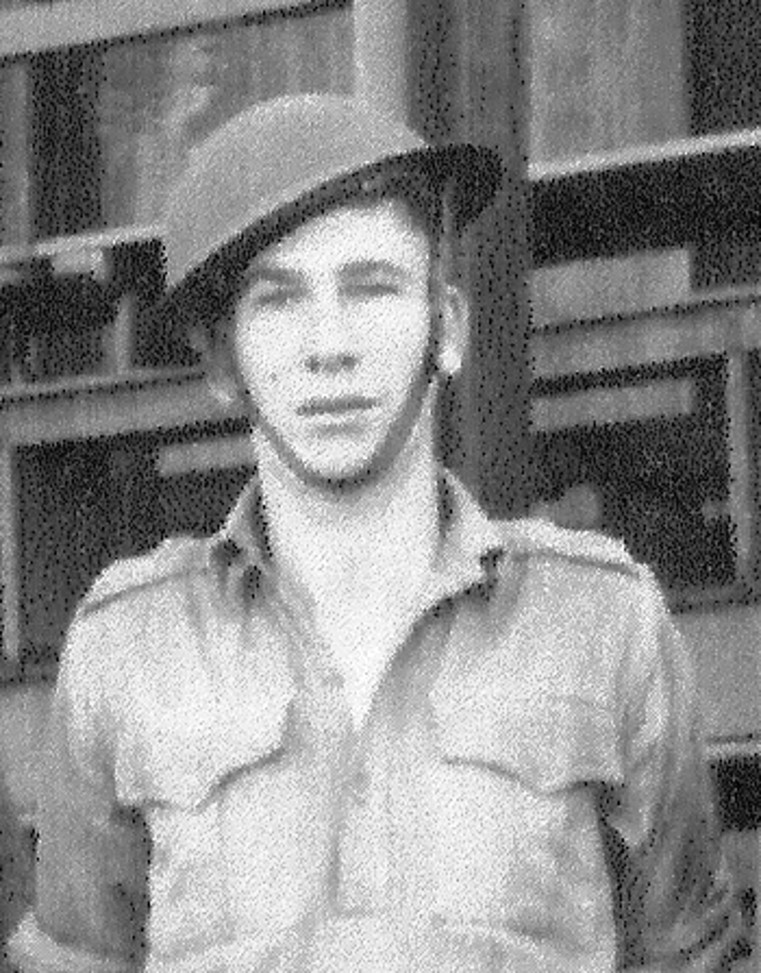
2. Many Australian escaped POWs in Europe fought alongside local partisan and resistance groups in Italy, Yugoslavia and Greece/Crete. That service was officially recognised as active service. Daniel Black received the Italy Star in recognition of his service with the Italian partisans.